
Our Commitment
Join the Celebration
Looking Ahead
Media Plan



1996-2000
In 1996, a bold vision emerged: to build a world-class business school in India.
Driven by visionary business leaders, policymakers and globally renowned academic institutions, the Indian School of Business was conceived as a new model for management education, one that combined global excellence with India’s growing ambitions.

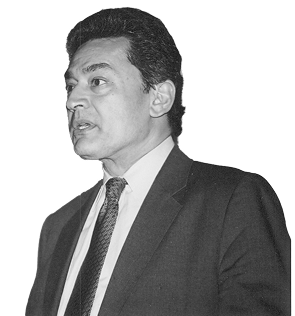
It is once in a lifetime that you build an institution that has been conceived by the world’s most respected corporations in collaboration with the best of the academia. I am proud to be a part of this endeavour.
- Rajat Gupta,
Founding Chairman, ISB
1996-2000
In 1996, a bold vision emerged: to build a world-class business school in India.
Driven by visionary business leaders, policymakers and globally renowned academic institutions, the Indian School of Business was conceived as a new model for management education, one that combined global excellence with India’s growing ambitions.

It is once in a lifetime that you build an institution that has been conceived by the world’s most respected corporations in collaboration with the best of the academia. I am proud to be a part of this endeavour.
- Rajat Gupta, Founding Chairman, ISB

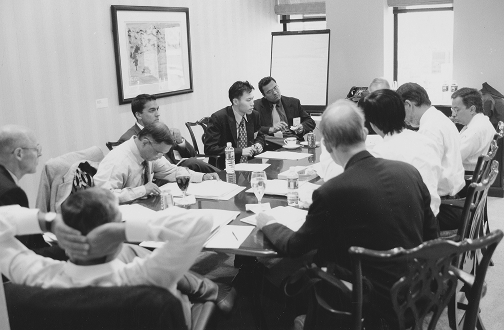


A strong institutional foundation emerged through collaboration between industry leaders, policymakers, and academic advisors across India and abroad.
ISB formally constituted its Board, establishing the governance and strategic framework for a globally benchmarked business school in India.
1996
1996
A strong institutional foundation emerged through collaboration between industry leaders, policymakers, and academic advisors across India and abroad.
ISB formally constituted its Board, establishing the governance and strategic framework for a globally benchmarked business school in India.

1997
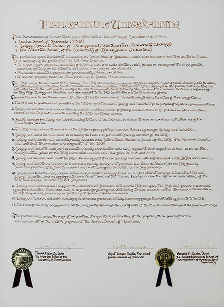
The Kellogg School of Management and the Wharton School joined the ISB vision as founding academic partners, helping shape a world-class institution from the very beginning.



1997
The Kellogg School of Management and the Wharton School joined the ISB vision as founding academic partners, helping shape a world-class institution from the very beginning.

1998

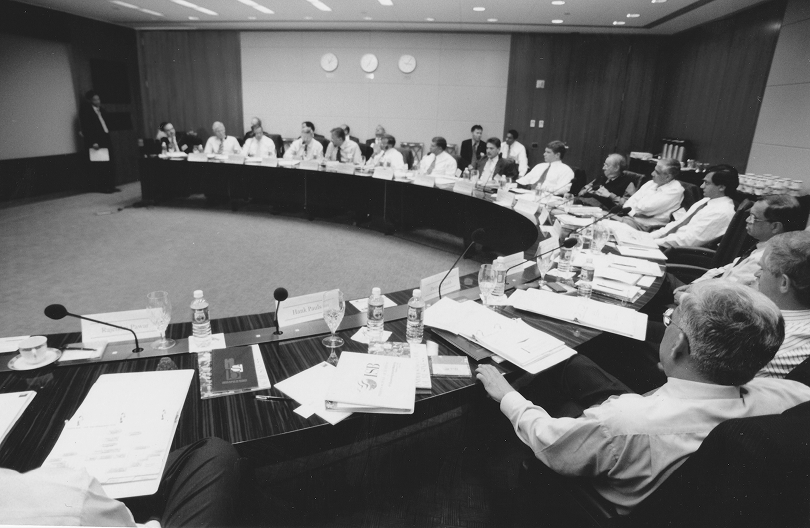
The first international Governing Board meeting, held at the McKinsey office in New York on October 13, 1998, refined ISB’s vision for globally relevant, research-led management education.
1998
The first international Governing Board meeting, held at the McKinsey office in New York on October 13, 1998, refined ISB’s vision for globally relevant, research-led management education.
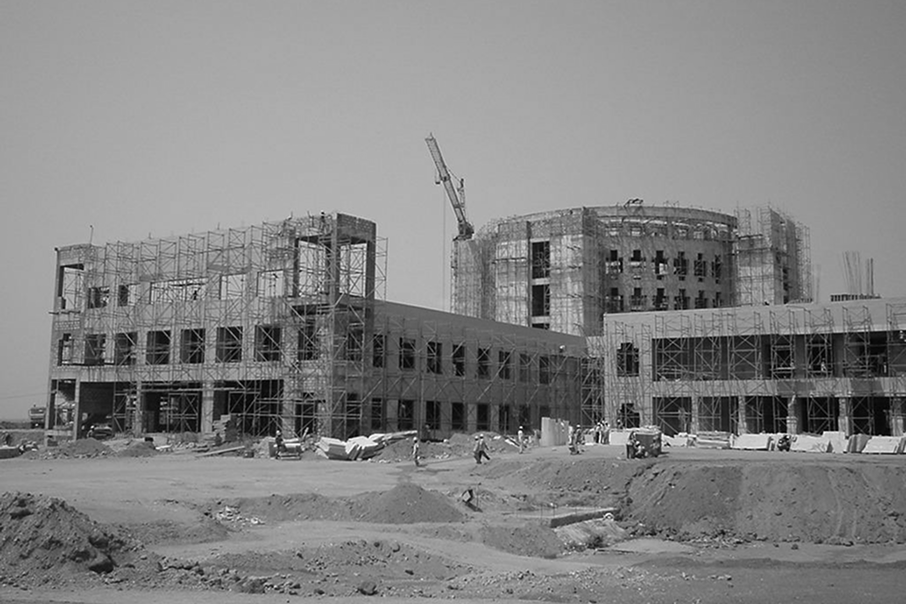
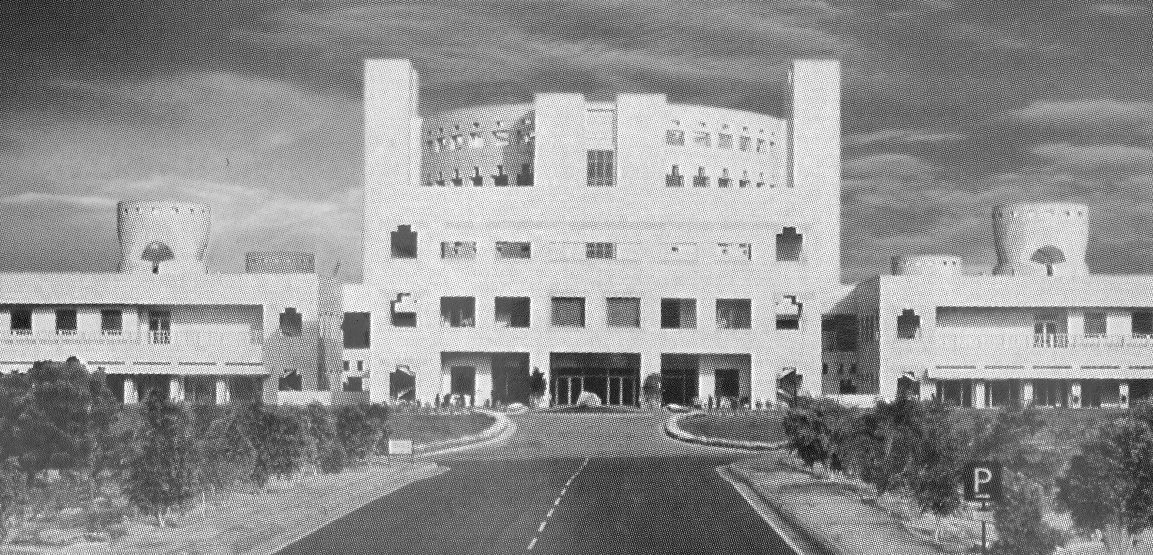
The sprawling 250-acre Hyderabad campus was designed as a fully residential learning environment that encouraged collaboration, community, and immersive learning.
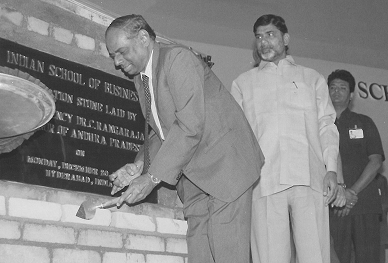
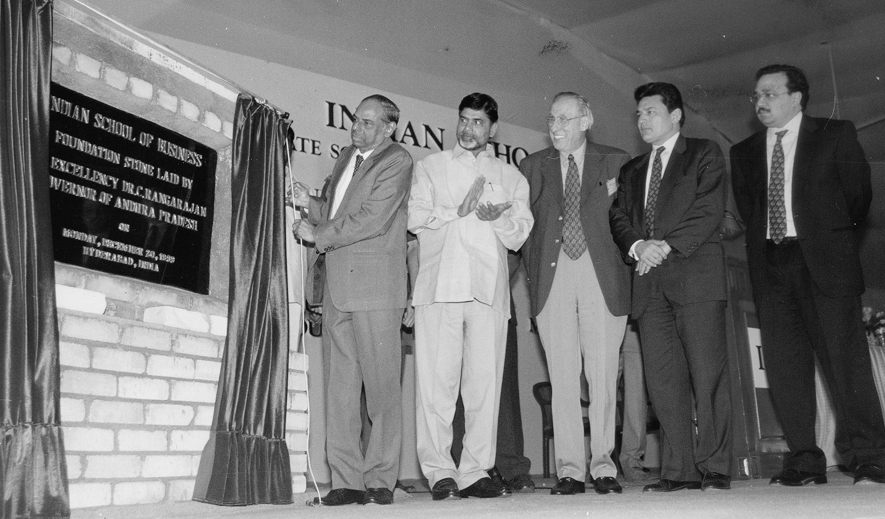
The foundation stone for the Hyderabad campus was laid by Andhra Pradesh Governor Chakravarthy Rangarajan in the presence of Chief Minister N. Chandrababu Naidu.
Designed by John Portman in collaboration with Hafeez Contractor, the campus blended contemporary learning spaces with architectural influences from the Taj Mahal and Fatehpur Sikri.
1999

1999
The sprawling 250-acre Hyderabad campus was designed as a fully residential learning environment that encouraged collaboration, community, and immersive learning.
Designed by John Portman in collaboration with Hafeez Contractor, the campus blended contemporary learning spaces with architectural influences from the Taj Mahal and Fatehpur Sikri.
The foundation stone for the Hyderabad campus was laid by Andhra Pradesh Governor Chakravarthy Rangarajan in the presence of Chief Minister N. Chandrababu Naidu.

Even before welcoming its first students, ISB had begun attracting the world’s finest minds and strongest supporters.
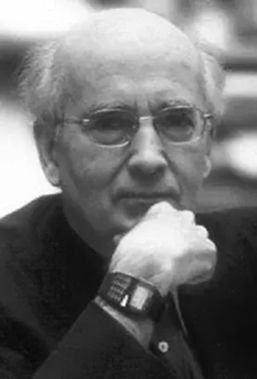
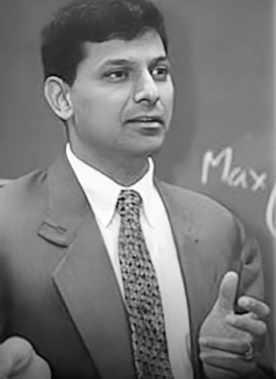
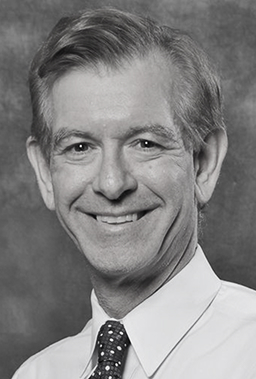
ISB assembled an exceptional roster of visiting faculty, including Philip Kotler, C.K. Prahalad, Raghuram Rajan, Krishna Palepu, David Besanko, Sumantra Ghoshal, Bala Balachandran, Srikant Datar, and several other globally renowned scholars from institutions such as Kellogg, Wharton, Harvard, Stanford, Chicago, and London Business School.



London Business School joined Kellogg and Wharton as ISB’s third global academic partner, further strengthening the School’s international foundation.
2000
2000
Even before welcoming its first students, ISB had begun attracting the world’s finest minds and strongest supporters.
London Business School joined Kellogg and Wharton as ISB’s third global academic partner, further strengthening the School’s international foundation.
ISB assembled an exceptional roster of visiting faculty, including Philip Kotler, C.K. Prahalad, Raghuram Rajan, Krishna Palepu, David Besanko, Sumantra Ghoshal, Bala Balachandran, Srikant Datar, and several other globally renowned scholars from institutions such as Kellogg, Wharton, Harvard, Stanford, Chicago, and London Business School.
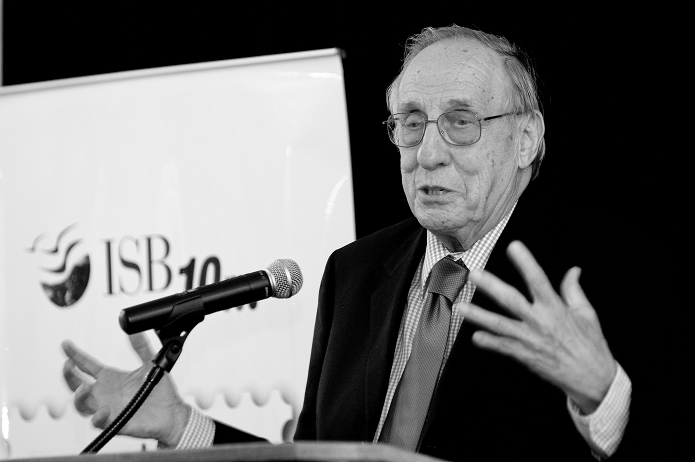
As ISB took shape, its defining elements came together: a pioneering one-year PGP, a globally benchmarked curriculum, a distinctive identity, and strong institutional support.

“
We have had the best brands in management education and research put together the ISB curriculum.
- Don Jacobs, Dean,
Kellogg Graduate School of Management,
Northwestern
University

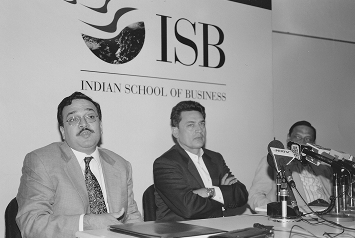
Rajat Gupta unveiled ISB's logo, a striking image of a globe transforming into birds—a symbol of boundless ambition and a vision that transcends borders.
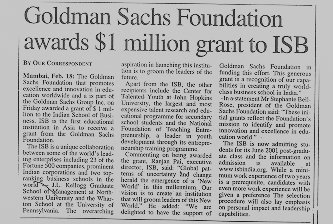
Goldman Sachs Foundation awarded ISB a US $1 million grant, making ISB the first educational institution in Asia to receive funding from the Foundation.
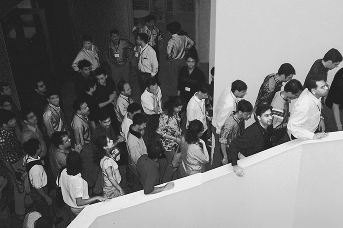
ISB announced its flagship one-year Post Graduate Programme in Management alongside Executive Education programmes, setting the direction for lifelong learning.
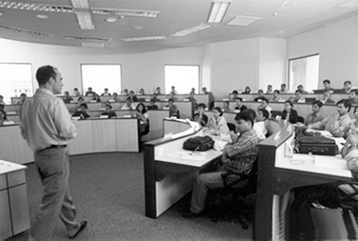
ISB unveiled its pioneering curriculum, designed around 700 contact hours, matching leading two-year MBA programmes globally.
As ISB took shape, its defining elements came together: a pioneering one-year PGP, a globally benchmarked curriculum, a distinctive identity, and strong institutional support.
We have had the best brands in management education and research put together the ISB curriculum.
- Don Jacobs, Dean,
Kellogg Graduate School of Management,
Northwestern University



Rajat Gupta unveiled ISB’s logo, a striking image of a globe transforming into birds—a symbol of boundless ambition and a vision that transcends borders.
Goldman Sachs Foundation awarded ISB a US $1 million grant, making ISB the first educational institution in Asia to receive funding from the Foundation.
ISB announced its flagship one-year Post Graduate Programme in Management alongside Executive Education programmes, setting the direction for lifelong learning.
ISB unveiled a pioneering curriculum that delivered the rigour of leading two-year MBA programmes in an intensive one-year format.


1996-2000
03
Academic Partnerships
Kellog | Wharton | LBS
40+
Campus Acreage
Acres, Hyderabad
260
Academic Partnerships
Kellog | Wharton | LBS
1996-2000
03
Academic Partnerships
Kellog | Wharton | LBS
40+
Campus Acreage
Acres, Hyderabad
260
Academic Partnerships
Kellog | Wharton | LBS
2001-2005
With the arrival of its first cohort in 2001, ISB’s vision became a reality.
Over the next five years, the School established itself as a globally connected institution, building academic excellence, nurturing a vibrant community, and forging partnerships that would shape its future.
We were really driven by a need to see more leadership in management thought coming from India.
- Dr. Pramath Raj Sinha,
Founding Dean, ISB (2001-02)
2001-2005
With the arrival of its first cohort in 2001, ISB’s vision became a reality.
Over the next five years, the School established itself as a globally connected institution, building academic excellence, nurturing a vibrant community, and forging partnerships that would shape its future.
We were really driven by a need to see more leadership in management thought coming from India.
- Dr. Pramath Raj Sinha,
Founding Dean, ISB (2001-02)
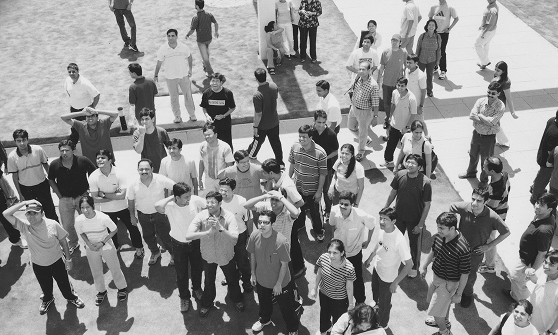

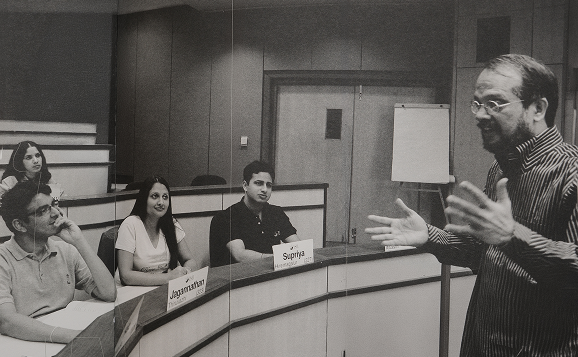
ISB’s arrival marked a new chapter in Indian higher education, introducing an education model built on academic excellence, immersive learning, and industry engagement.
2001
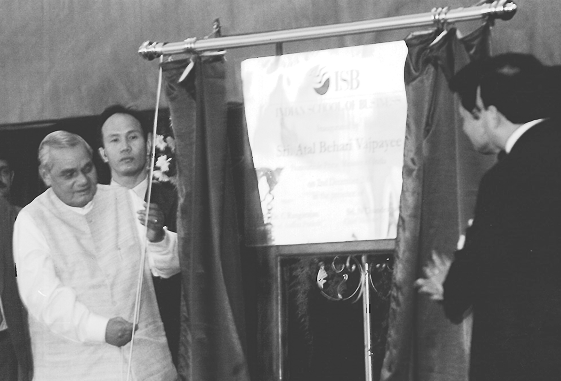
ISB was inaugurated by Prime Minister Atal Bihari Vajpayee, who dedicated it to the nation as “Rashtra Dakshina.”
The inaugural PGP class comprised 128 students, including Vir Chakra awardee Ashish Sonal, with 20 women among the cohort.
2001
ISB’s arrival marked a new chapter in Indian higher education, introducing an education model built on academic excellence, immersive learning, and industry engagement.
ISB was inaugurated by Prime Minister Atal Bihari Vajpayee, who dedicated it to the nation as “Rashtra Dakshina.”
The inaugural PGP class comprised 128 students, including Vir Chakra awardee Ashish Sonal, with 20 women among the cohort.

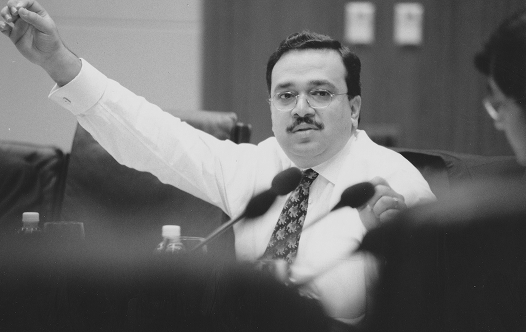

ISB established the Wadhwani Centre for Entrepreneurship Development (WCED), embedding entrepreneurship into the School’s vision from day one.
ISB appointed its first four permanent faculty members: Kavil Ramachandran, Pankaj Chandra, Trilochan Sastry and P.S. Srinivas, laying the foundation for a world-class faculty.
Dr. Pramath Raj Sinha was appointed Founding Dean and went on to play a central role in shaping ISB’s early academic vision and positioning the School within the international management education landscape.
As the campus took shape, ISB also began defining its academic philosophy, leadership culture, and institutional identity.
As the campus took shape, ISB also began defining its academic philosophy, leadership culture, and institutional identity.
ISB appointed its first four permanent faculty members: Kavil Ramachandran, Pankaj Chandra, Trilochan Sastry and P.S. Srinivas, laying the foundation for a world-class faculty.
Dr. Pramath Raj Sinha was appointed Founding Dean and went on to play a central role in shaping ISB’s early academic vision and positioning the School within the international management education landscape.
ISB established the Wadhwani Centre for Entrepreneurship Development (WCED), embedding entrepreneurship into the School’s vision from day one.
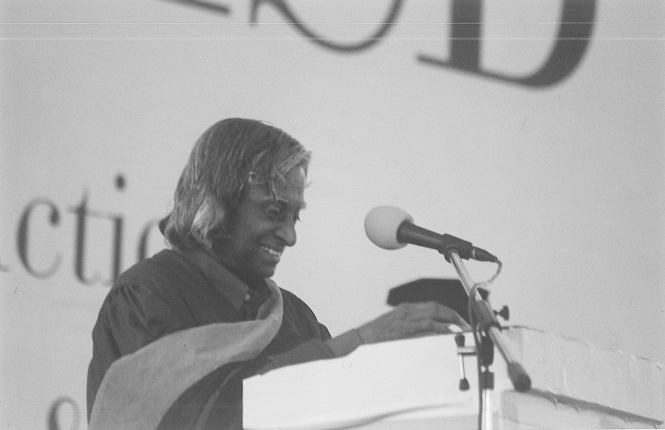
The graduation of ISB’s founding class marked the beginning of a lifelong journey of leadership and impact.
2002
“If you have integrity, nothing else matters. If you don’t have integrity, nothing else matters.”
— Dr APJ Abdul Kalam,
addressing ISB’s founding class on June 23, 2002
“
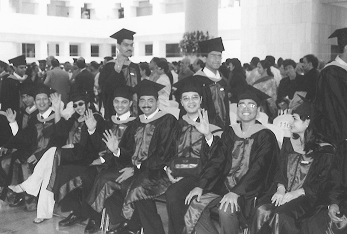
At ISB’s first Graduation Day in 2002, Dr APJ Abdul Kalam, then the Presidential candidate, addressed the founding class as Chief Guest, marking a memorable milestone in the School’s journey.
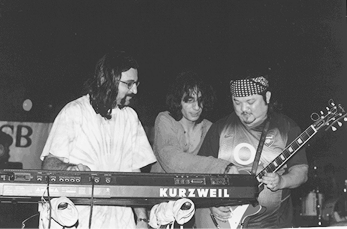
Solstice was launched as an annual alumni homecoming event, laying the foundation for a lifelong global ISB community.
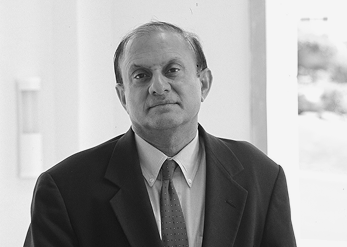
Professor Vijay Mahajan was appointed Dean, strengthening the School’s academic leadership and institutional foundations.
2002
The graduation of ISB’s founding class marked the beginning of a lifelong journey of leadership and impact.
“If you have integrity, nothing else matters. If you don’t have integrity, nothing else matters.”
- Dr APJ Abdul Kalam,
addressing ISB’s founding class on June 23,
2002

At ISB’s first Graduation Day in 2002, Dr APJ Abdul Kalam, then the Presidential candidate, addressed the founding class as Chief Guest, marking a memorable milestone in the School’s journey.
Solstice was launched as an annual alumni homecoming event, laying the foundation for a lifelong global ISB community.
Professor Vijay Mahajan was appointed Dean, strengthening the School’s academic leadership and institutional foundations.



2003
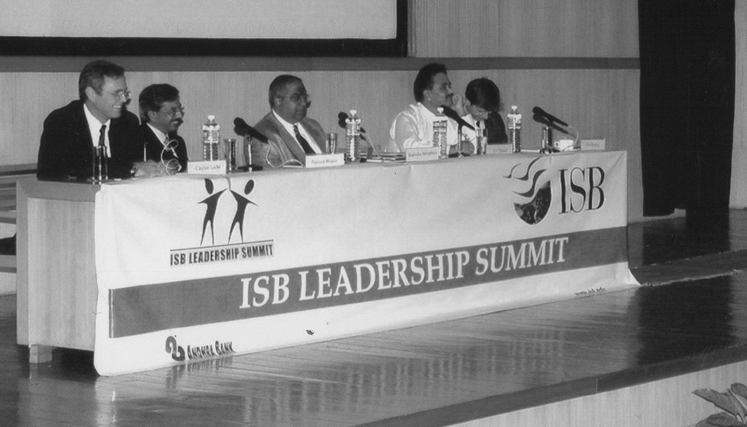
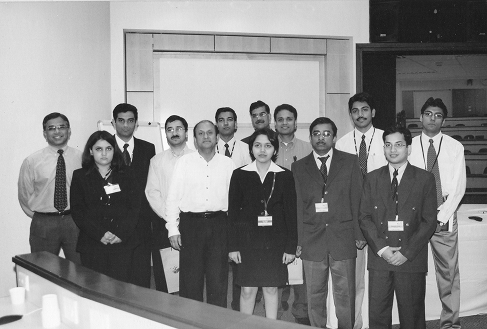
The ISB Leadership Summit was introduced as a platform for dialogue between students, industry leaders, policymakers, and entrepreneurs.
2003
The ISB Leadership Summit was introduced as a platform for dialogue between students, industry leaders, policymakers, and entrepreneurs.

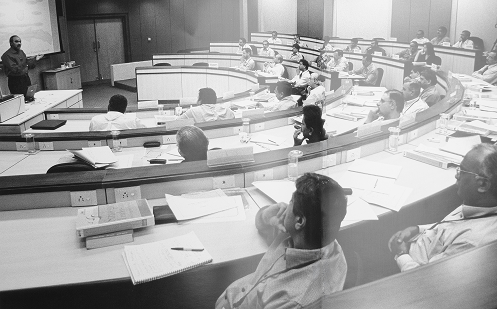
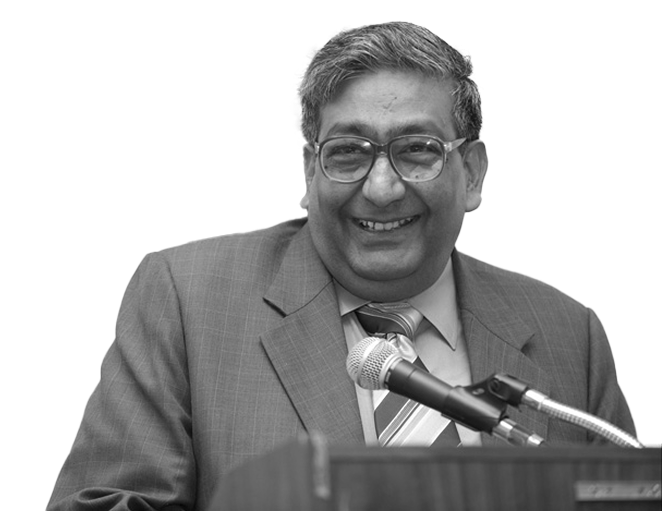
ISB expanded its executive education footprint by launching globally collaborative programmes and attracting corporate leaders from international markets.
The School established K-Hub, a knowledge hub designed to mentor, incubate, and support start-up ventures through business acceleration and early-stage funding.
ISB established the Centre for Analytical Finance (CAF), strengthening its focus on world-class research and thought leadership in finance.
ISB appointed Professor Nandini Lahiri as its first woman faculty member.
Professor M. R. Rao was appointed Dean, bringing renewed focus to faculty recruitment, academic quality, and institutional growth.
New leadership, research capabilities, executive education, and entrepreneurship initiatives strengthened ISB’s institutional foundation.
2004

2004
ISB’s arrival marked a new chapter in Indian higher education, introducing an education model built on academic excellence, immersive learning, and industry engagement.
The School established K-Hub, a knowledge hub designed to mentor, incubate, and support start-up ventures through business acceleration and early-stage funding.
ISB expanded its executive education footprint by launching globally collaborative programmes and attracting corporate leaders from international markets.
Professor M. R. Rao was appointed Dean, bringing renewed focus to faculty recruitment, academic quality, and institutional growth.
ISB established the Centre for Analytical Finance (CAF), strengthening its focus on world-class research and thought leadership in finance.
2005
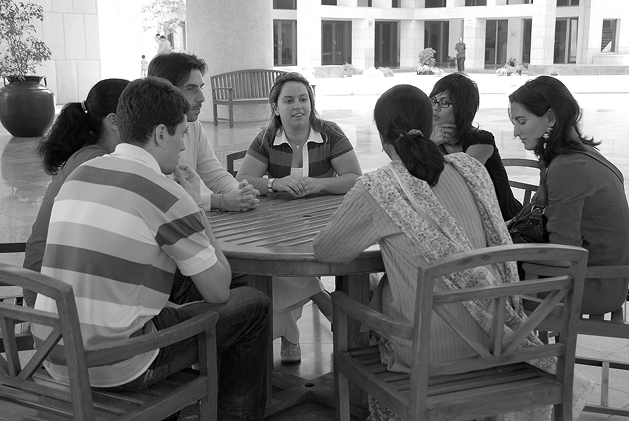
ISB partnered with Wharton to launch the India Master Class, an executive learning programme that gave global business leaders immersive insights into India's rapidly evolving economy.
ISB significantly expanded its international student exchange network by partnering with leading business schools across Asia, Africa, and beyond.
By 2005, ISB had evolved into an internationally connected institution, expanding opportunities for students, while showcasing India’s business landscape to global executives.
2005
By 2005, ISB had evolved into an internationally connected institution, expanding opportunities for students, while showcasing India’s business landscape to global executives.
ISB partnered with Wharton to launch the India Master Class, an executive learning programme that gave global business leaders immersive insights into India’s rapidly evolving economy.
Professor M. R. Rao was appointed Dean, bringing renewed focus to faculty recruitment, academic quality, and institutional growth.
2001-2005
03
Academic Partnerships
Kellog | Wharton | LBS
40+
Campus Acreage
Acres, Hyderabad
260
Academic Partnerships
Kellog | Wharton | LBS
2001-2005
03
Academic Partnerships
Kellog | Wharton | LBS
40+
Campus Acreage
Acres, Hyderabad
260
Academic Partnerships
Kellog | Wharton | LBS
2006-2010
Within a decade, ISB had transformed from a bold vision into one of the
world's leading business schools.
By 2010, the School had reached 12th
globally in the Financial Times Global MBA Rankings, alongside
significant growth in research, international partnerships, industry
engagement, and campus expansion.


I always believed we could build institutions in India that
are research focused—ISB’s vision statement to do
cutting-edge research spoke to me.
- Professor M. R. Rao,
Dean (2004-09)
2006-2010
Within a decade, ISB had transformed from a bold vision into one of the world’s leading business schools.
By 2010, the School had reached 12th globally in the Financial Times Global MBA Rankings, alongside significant growth in research, international partnerships, industry engagement, and campus expansion.
I always believed we could build institutions in India that are research focused—ISB’s vision statement to do cutting-edge research spoke to me.
- Professor M. R. Rao,
Dean (2004-09)
ISB's growing visibility brought global attention
to the School,
as focus on cutting-edge research
and corporate partnerships
strengthened its
research foundations at home.

2006
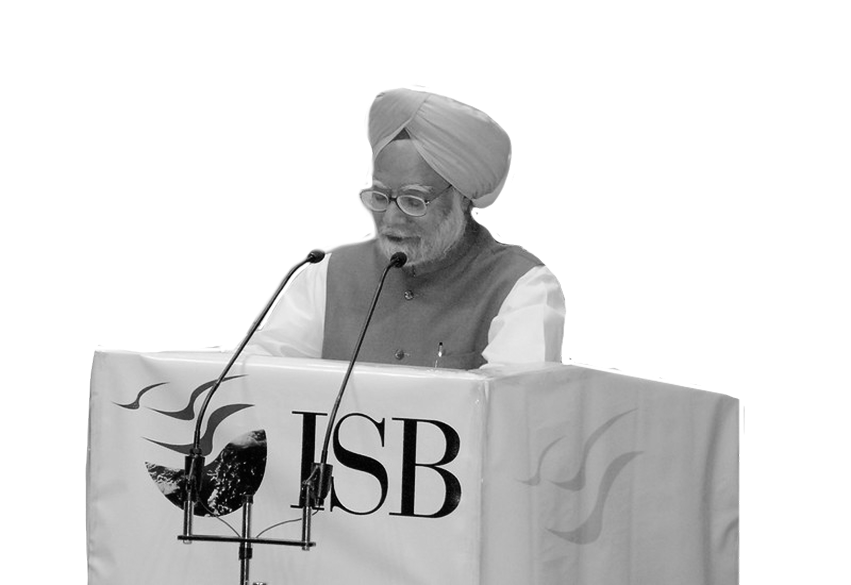
ISB celebrated its fifth anniversary in the presence of Prime Minister Dr. Manmohan Singh, marking an important milestone in the School's early journey.

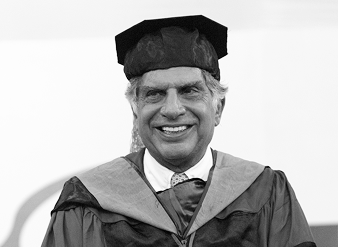
Ratan Tata, Chairman of the Tata Group, addressed the Graduation Ceremony as chief guest, urging graduates to combine professional achievement with social responsibility.
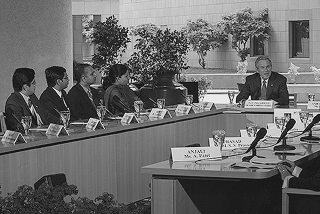
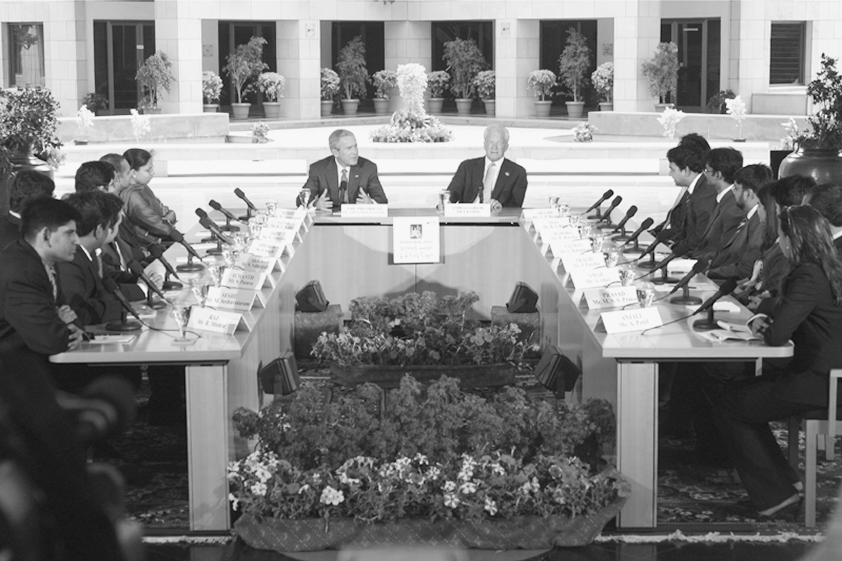
During his visit to the Hyderabad campus, US President George W. Bush engaged with young entrepreneurs, underscoring ISB's role in global conversations on leadership, education, and economic opportunity.
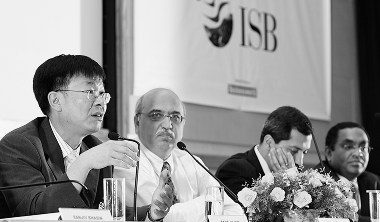
ISB strengthened its research ecosystem by establishing three new Centres of Excellence and attracting more industry support, including a US$1 million contribution from Goldman Sachs for the Centre for Analytical Finance.
ISB launched the Centre for IT and the Networked Economy (now the Srini Raju Centre for IT and the Networked Economy), strengthening research at the intersection of technology, business and society.
2006
The graduation of ISB’s founding class marked the beginning of a lifelong journey of leadership and impact.
ISB celebrated its fifth anniversary in the presence of Prime Minister Dr. Manmohan Singh, marking an important milestone in the School’s early journey.
Ratan Tata, Chairman of the Tata Group, addressed the Graduation Ceremony as chief guest, urging graduates to combine professional achievement with social responsibility.
During his visit to the Hyderabad campus, US President George W. Bush engaged with young entrepreneurs, underscoring ISB’s role in global conversations on leadership, education, and economic opportunity.
As ISB’s research ecosystem grew, it attracted significant industry support, including a US$1 million contribution from Goldman Sachs for the Centre for Analytical Finance (CAF).
ISB launched the Centre for IT and the Networked Economy (now the Srini Raju Centre for IT and the Networked Economy), strengthening research at the intersection of technology, business and society.
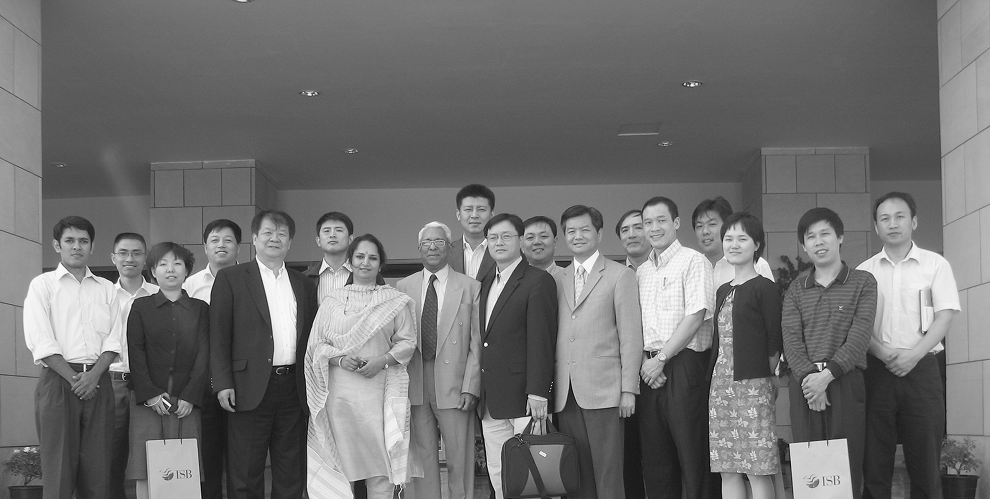
ISB expanded its international collaborations and corporate partnerships, creating unprecedented new opportunities for research, learning, and institutional growth.
2007
2007
ISB expanded its international collaborations and corporate partnerships,
creating unprecedented
new opportunities for research, learning, and institutional growth.
ISB deepened its global engagement through partnerships with universities in Brazil, Russia, and China. It also expanded collaborations with Cornell University and Columbia University across research, curriculum development, and other academic initiatives.

2008
2008
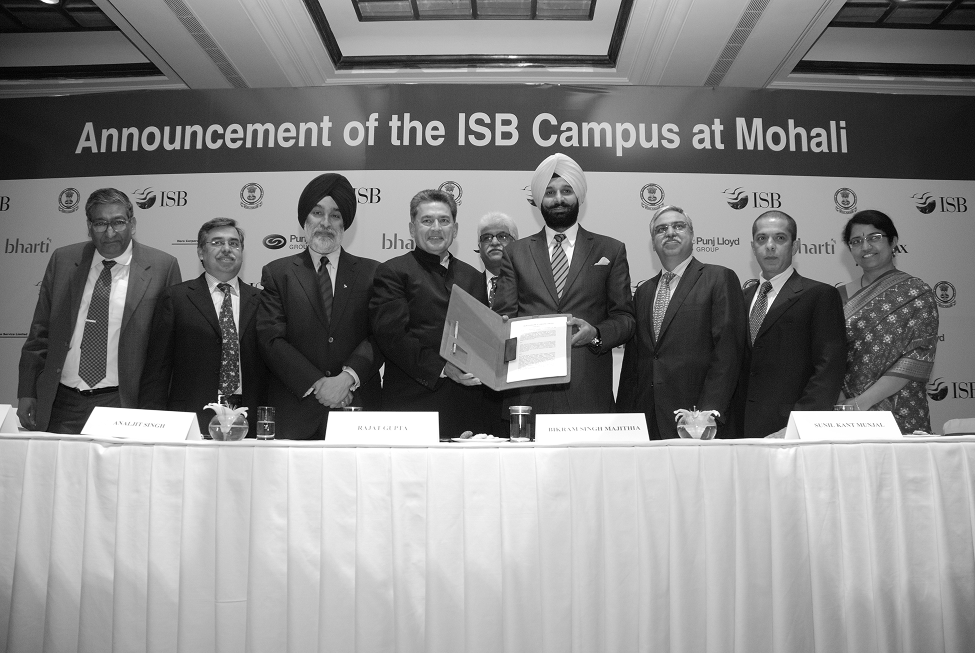
Heralding ISB’s expansion beyond Hyderabad, an MoU was signed for the establishment of another state-of-the-art campus in Mohali.
The Goldman Sachs Group partnered with ISB to deliver business and management education to 10,000 Indian women facing systemic barriers.
ISB broadened its influence beyond the classroom, building strategic partnerships with industry, government, and philanthropic organisations to advance research and executive education.
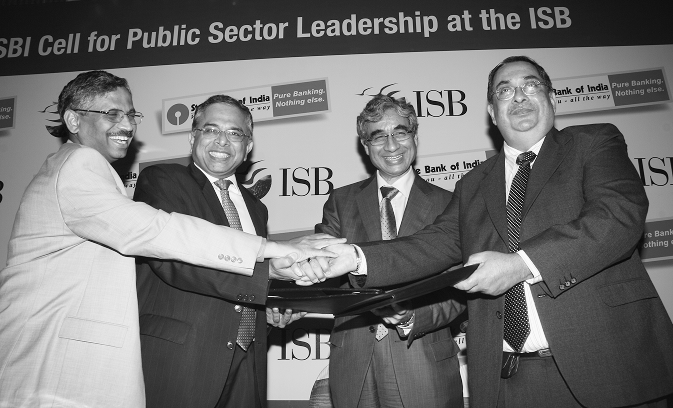

Partnerships with SBI and Biocon expanded ISB’s research ecosystem through dedicated initiatives in public sector leadership, innovation, and entrepreneurship.
2009

2009
ISB broadened its influence beyond the classroom, building strategic partnerships with industry, government, and philanthropic organizations to advance research and executive education.
ISB partnered with the Indian Railways to strengthen leadership development for senior officers through executive education.
Partnerships with SBI and Biocon expanded ISB’s research ecosystem through dedicated initiatives in public sector leadership, innovation, and entrepreneurship.
The School introduced the ‘Shadow a CEO’ initiative, where students bid for a day with leading business leaders, and all proceeds going to charity.
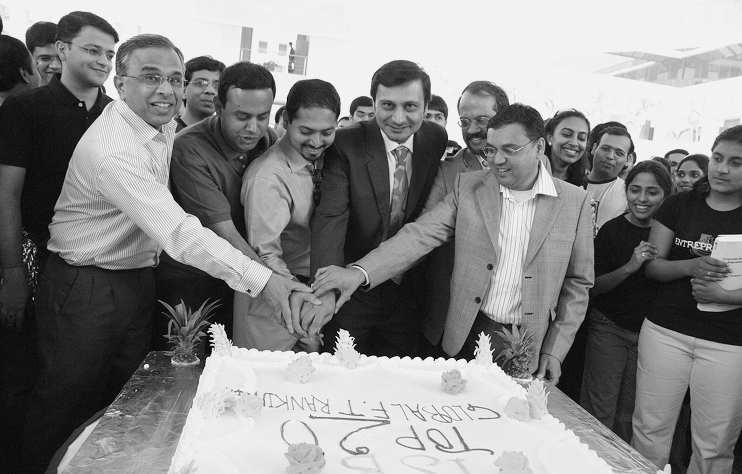
2010 was the year ISB reached an important inflection point: The School climbed global rankings, laid the foundation for its second campus, and welcomed a new Dean.

2010
The School was ranked 12th in the Financial Times Global MBA Ranking, making ISB the only Indian business school to feature on the prestigious list for three consecutive years.
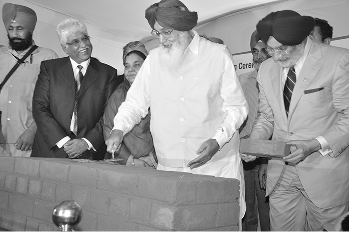
The foundation stone for the Mohali campus was laid, with Punjab Chief Minister Parkash Singh Badal in attendance.
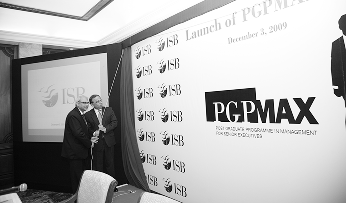
The first cohort of PGP MAX, ISB's postgraduate management programme for senior executives, commenced classes with 66 participants.
ISB partnered with MIT Sloan School of Management to set up the BML Munjal Institute for Manufacturing Excellence and Innovation and the Punj Lloyd Institute of Physical Infrastructure Management at Mohali.

ISB launched the Centre for Business Analytics (now the Institute of Data Science), reflecting its early vision of harnessing data and technology to address real-world challenges.
2010
2010 was the year
ISB reached an important inflection point: The School climbed global rankings,
laid
the foundation for its second campus, and welcomed a new Dean..
The School was ranked 12th in the Financial Times Global MBA Ranking, making ISB the only Indian business school to feature on the prestigious list for three consecutive years.
The foundation stone for the Mohali campus was laid, with Punjab Chief Minister Parkash Singh Badal in attendance.
The first cohort of PGP MAX, ISB’s postgraduate management programme for senior executives, commenced classes with 66 participants.
ISB partnered with MIT Sloan School of Management to set up the BML Munjal Institute for Manufacturing Excellence and Innovation and the Punj Lloyd Institute of Physical Infrastructure Management at Mohali. .
ISB launched the Centre for Business Analytics (now the Institute of Data Science), reflecting its early vision of harnessing data and technology to address real-world challenges.
2006-2010
03
Academic Partnerships
Kellog | Wharton | LBS
40+
Campus Acreage
Acres, Hyderabad
260
Academic Partnerships
Kellog | Wharton | LBS
2006-2010
03
Academic Partnerships
Kellog | Wharton | LBS
40+
Campus Acreage
Acres, Hyderabad
260
Academic Partnerships
Kellog | Wharton | LBS
2011-2015
ISB’s second decade marked a period of significant expansion. A second campus, new programmes, international accreditation, specialised institutes, and deeper industry partnerships broadened the School’s academic and institutional footprint.
Our biggest priority is research. India is a fertile ground for high-quality research in areas such as leadership, financial markets and technology.
- Ajit Rangnekar,
Dean (2009-15)

2011-2015
ISB’s second decade marked a period of significant expansion. A second campus, new programmes, international accreditation, specialised institutes, and deeper industry partnerships broadened the School’s academic and institutional footprint.
Our biggest priority is research. India is a fertile ground for high-quality research in areas such as leadership, financial markets and technology.
- Ajit Rangnekar,
Dean (2009-15)
ISB became the first B-school in South Asia to receive accreditation from the Association to Advance Collegiate Schools of Business (AACSB), further strengthening its international academic standing.
New programmes, global accreditation and a decade of growth marked ISB’s next phase of evolution.
2011
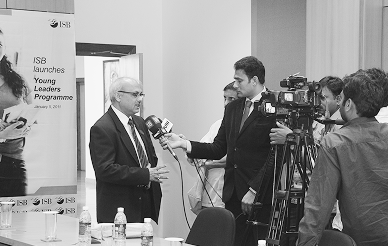
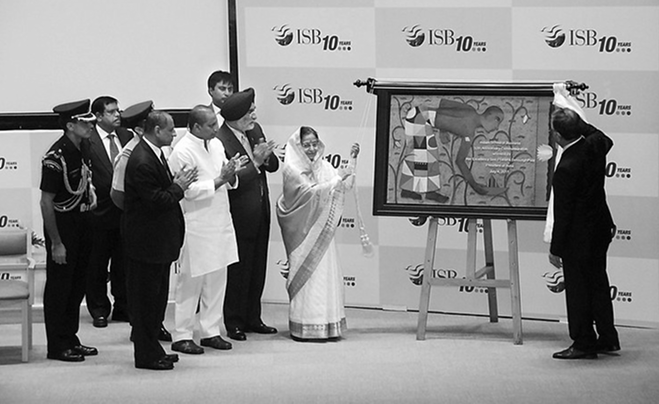
ISB celebrated its 10th anniversary in the presence of President Pratibha Patil, marking a decade of remarkable institutional growth.
The School expanded its academic portfolio by launching the Fellow Programme in Management (FPM) and the Young Leaders Programme (YLP), extending its reach across doctoral education and early-career leadership development.
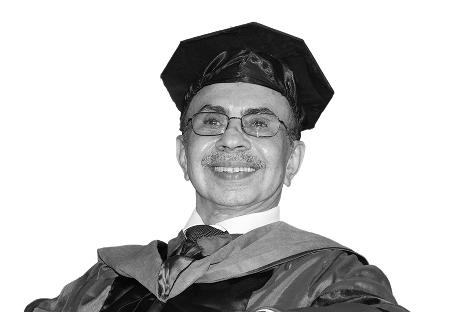
Adi Godrej was elected Chairman of the ISB Executive Board, ushering in the next phase of the School’s growth.
2011
New programmes, global accreditation and a decade of growth marked ISB’s next phase of evolution.
ISB became the first B-school in South Asia to receive accreditation from the Association to Advance Collegiate Schools of Business (AACSB), further strengthening its international academic standing.
The School expanded its academic portfolio by launching the Fellow Programme in Management (FPM) and the Young Leaders Programme (YLP), extending its reach across doctoral education and early-career leadership development.
ISB celebrated its 10th anniversary in the presence of President Pratibha Patil, marking a decade of remarkable institutional growth.
Adi Godrej was elected Chairman of the ISB Executive Board, ushering in the next phase of the School’s growth.
The inauguration of the Mohali campus marked ISB’s emergence as a multi-campus institution, expanding its national footprint, while strengthening research and engagement across critical sectors.
2012
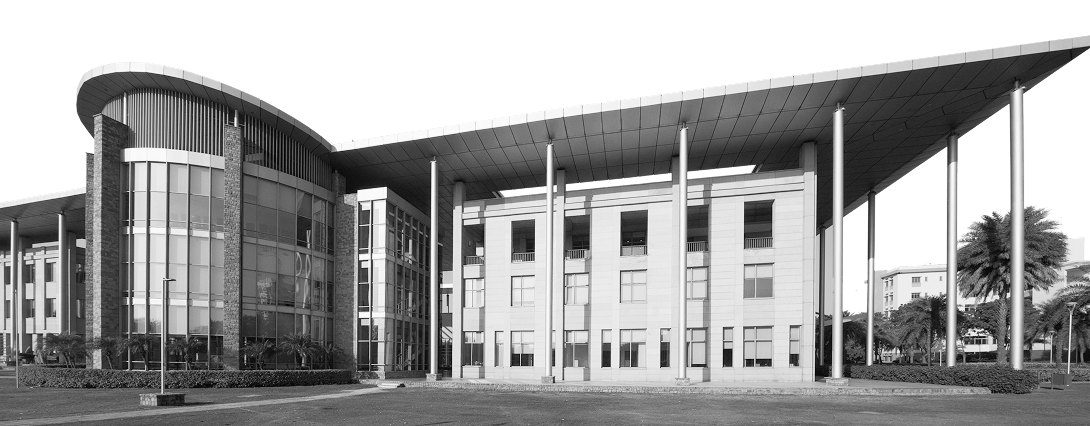
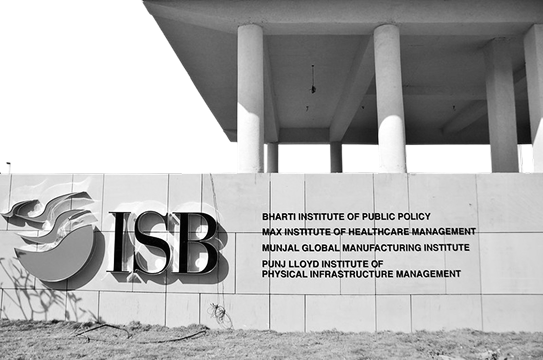
ISB inaugurated its 70-acre Mohali campus, bringing together four dedicated research institutes: Bharti Institute of Public Policy, Max Institute of Healthcare Management, Munjal Institute for Global Manufacturing, and Punj Lloyd Institute of Infrastructure Management.
ISB introduced the Post Graduate Programme (PGP) at the Mohali campus, welcoming its first cohort and commencing academic activities at the new campus.
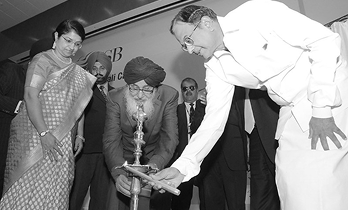
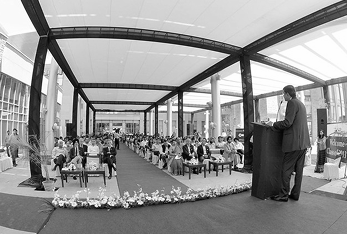
Speaking at the inauguration, Union Finance Minister P. Chidambaram urged students to seize opportunities across the world, while reminding them that no place would challenge them quite like India.
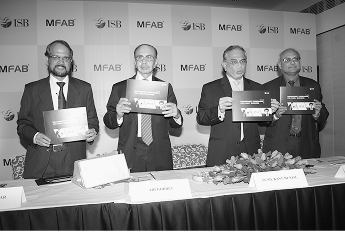
ISB launched PGP in Management for Family Business (PGP MFAB) with the aim of grooming the next generation of leaders from family-owned businesses.
2012
The inauguration of the Mohali campus marked ISB’s emergence as a multi-campus institution, expanding its national footprint, while strengthening research and engagement across critical sectors.
ISB inaugurated its 70-acre Mohali campus, bringing together four dedicated research institutes: Bharti Institute of Public Policy, Max Institute of Healthcare Management, Munjal Institute for Global Manufacturing, and Punj Lloyd Institute of Infrastructure Management.
ISB introduced the Post Graduate Programme (PGP) at the Mohali campus, welcoming its first cohort and commencing academic activities at the new campus.
Speaking at the inauguration, Union Finance Minister P. Chidambaram urged students to seize opportunities across the world, while reminding them that no place would challenge them quite like India.
ISB launched PGP in Management for Family Business (PGP MFAB) with the aim of grooming the next generation of leaders from family-owned businesses.

ISB expanded its impact through new learning opportunities, a stronger alumni community and closer engagement with industry.
2013
2014
ISB launched its Certificate Programme in Business Analytics, laying the foundation for what is today the Advanced Management Programme in Business Analytics.
ISB launched Equinox, its annual alumni homecoming at the Mohali campus, bringing the growing ISB community together.
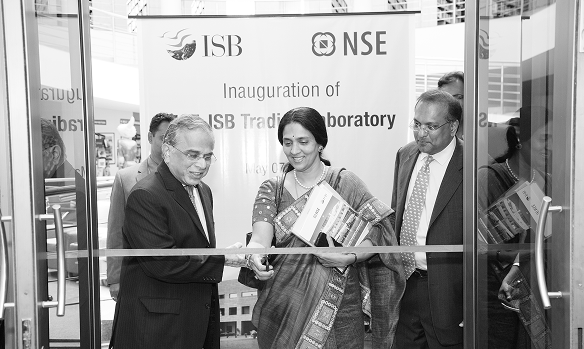
In partnership with the National Stock Exchange (NSE), ISB established India’s first business school trading laboratory, giving students and researchers access to real-time financial markets while strengthening research and industry collaboration in finance.
2013
ISB expanded its impact through new learning opportunities, a stronger alumni community and closer engagement with industry.
The Goldman Sachs Group partnered with ISB to deliver business and management education to 10,000 Indian women facing systemic barriers.
ISB launched Equinox, its annual alumni homecoming at the Mohali campus, bringing the growing ISB community together.
2014
In partnership with the National Stock Exchange (NSE), ISB established India’s first business school trading laboratory, giving students and researchers access to real-time financial markets while strengthening research and industry collaboration in finance.
1-B5ABFLaN.png)
ISB broadened its academic footprint through specialised programmes, strategic partnerships, and entrepreneurship initiatives that addressed emerging industry and societal needs.
2015
ISB launched the Management Programme in Public Policy, delivered by the Bharti Institute of Public Policy in collaboration with the Fletcher School of Law & Diplomacy, preparing mid- and senior-career leaders for public service.
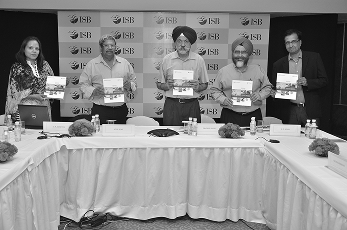
ISB launched the Leadership Programme in Infrastructure Management through the Punj Lloyd Institute of Infrastructure Management to develop leaders for India’s rapidly growing infrastructure sector.
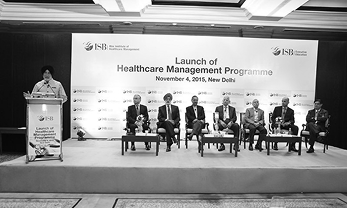
The Max Institute of Healthcare Management, developed in collaboration with the Wharton School, launched a one-year, part-time Healthcare Management Programme to advance excellence in healthcare management.
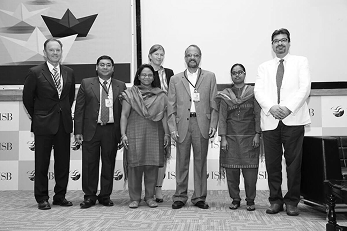
The Thomas Schmidheiny Centre for Family Enterprise was established to advance research and knowledge on family businesses.
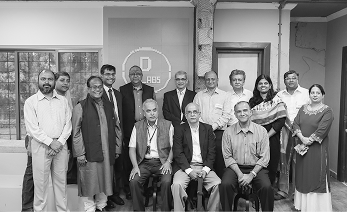
DLabs, ISB’s first startup incubator, was established with support from the Department of Science and Technology, Government of India, to support early-stage ventures through incubation and acceleration.
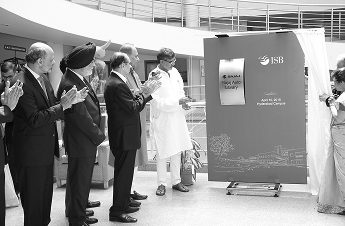
Bajaj Auto supported ISB’s research and education initiatives through funding for learning resources and scholarships for deserving PGP students.
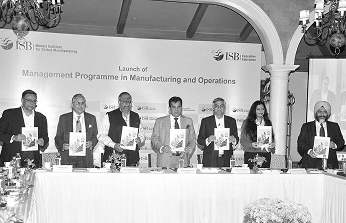
ISB launched the Management Programme in Manufacturing and Operations through the Munjal Institute for Global Manufacturing, laying the foundation for today's Advanced Management Programme in Operations and Supply Chain.
2015
ISB broadened its academic footprint through specialised programmes, strategic partnerships, and entrepreneurship initiatives that addressed emerging industry and societal needs.
ISB launched the Management Programme in Public Policy, delivered by the Bharti Institute of Public Policy in collaboration with the Fletcher School of Law & Diplomacy, preparing mid- and senior-career leaders for public service.
ISB launched the Leadership Programme in Infrastructure Management through the Punj Lloyd Institute of Infrastructure Management to develop leaders for India’s rapidly growing infrastructure sector.
The Max Institute of Healthcare Management, developed in collaboration with the Wharton School, launched a one-year, part-time Healthcare Management Programme to advance excellence in healthcare management.
The Thomas Schmidheiny Centre for Family Enterprise was established to advance research and knowledge on family businesses.
DLabs, ISB’s first startup incubator, was established with support from the Department of Science and Technology, Government of India, to support early-stage ventures through incubation and acceleration.
Bajaj Auto supported ISB’s research and education initiatives through funding for learning resources and scholarships for deserving PGP students.
ISB launched the Management Programme in Manufacturing and Operations through the Munjal Institute for Global Manufacturing, laying the foundation for today’s Advanced Management Programme in Operations and Supply Chain.
2011-2015
03
Academic Partnerships
Kellog | Wharton | LBS
40+
Campus Acreage
Acres, Hyderabad
260
Academic Partnerships
Kellog | Wharton | LBS
2011-2015
03
Academic Partnerships
Kellog | Wharton | LBS
40+
Campus Acreage
Acres, Hyderabad
260
Academic Partnerships
Kellog | Wharton | LBS
2016-2020
ISB broadened its academic portfolio across sectors and career stages while strengthening its global reputation through research excellence, international partnerships, and accreditations.
By 2020, the School had earned the prestigious Triple Crown accreditation, joining an elite group of globally accredited business schools
11 unicorns have ISB co-founders, and that is the true achievement. It’s not getting jobs, which we do very well, it’s creating jobs. And that is what our alums are very good at doing.
- Professor Rajendra Srivastava,
Dean (2016-21)
2016-2020
ISB broadened its academic portfolio across sectors and career stages while strengthening its global reputation through research excellence, international partnerships, and accreditations.
By 2020, the School had earned the prestigious Triple Crown accreditation, joining an elite group of globally accredited business schools
11 unicorns have ISB co-founders, and that is the true achievement. It’s not getting jobs, which we do very well, it’s creating jobs. And that is what our alums are very good at doing.
- Professor Rajendra Srivastava, Dean (2016-21)

ISB expanded learning opportunities through new programmes, strategic partnerships, and investments that strengthened its academic and institutional ecosystem.
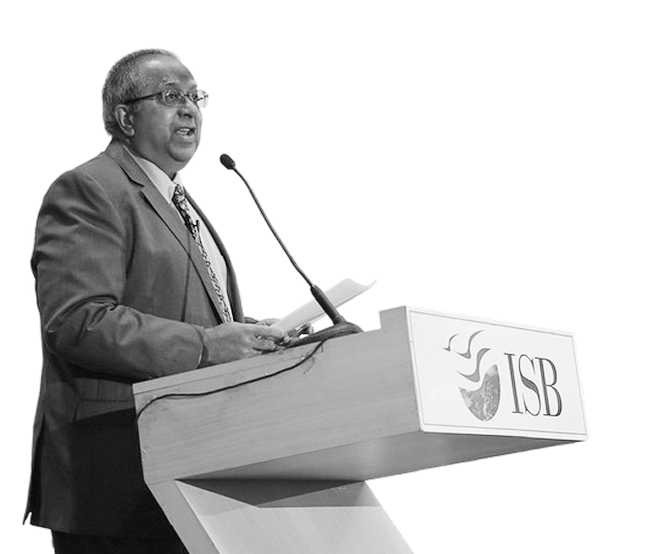
Professor Rajendra Srivastava was appointed Dean, ushering in a new phase of growth for the School.
2016
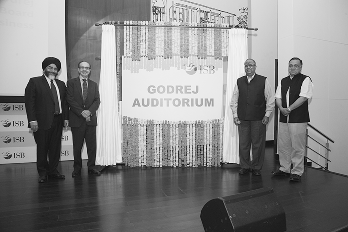
ISB unveiled the Godrej Auditorium at its Mohali campus, recognising the philanthropic support of Adi Godrej, the Godrej Group, and the Phirozshah Godrej Foundation.
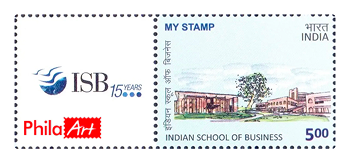
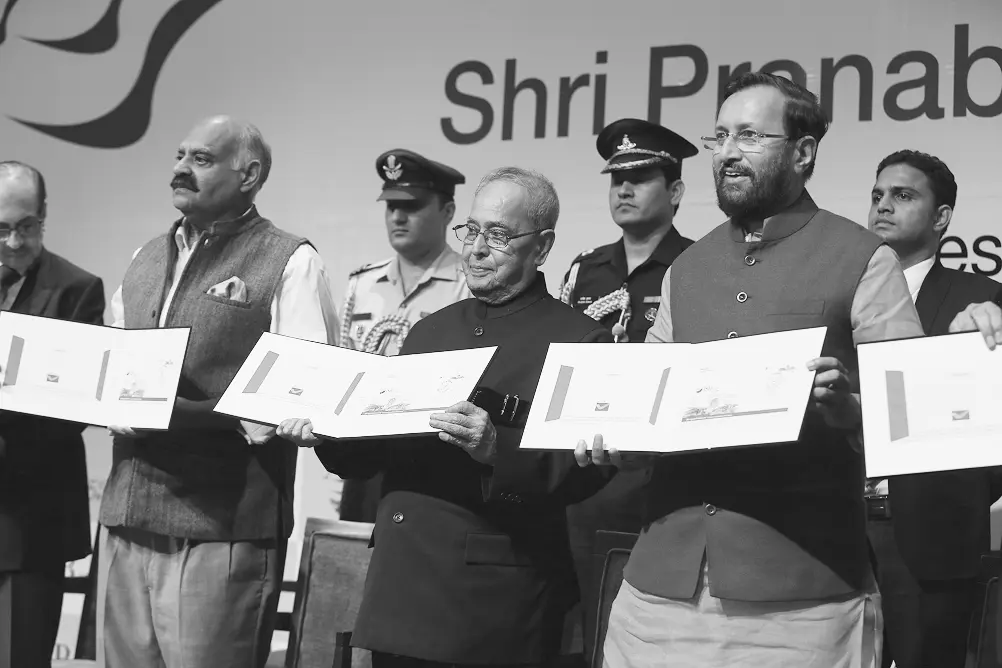
During ISB’s 15th anniversary celebrations in Mohali, Punjab Governor V.P. Singh Badnore released a commemorative stamp, presenting the first copy to the President of India, Pranab Mukherjee.
%201-BXmiMoAV.png)
PGP PRO was launched for working professionals seeking a flexible management education experience.
2016
ISB expanded learning opportunities through new programmes, strategic partnerships, and investments that strengthened its academic and institutional ecosystem.
Professor Rajendra Srivastava was appointed Dean, ushering in a new phase of growth for the School.
ISB unveiled the Godrej Auditorium at its Mohali campus, recognising the philanthropic support of Adi Godrej, the Godrej Group, and the Phirozshah Godrej Foundation.
During ISB’s 15th anniversary celebrations in Mohali, Punjab Governor V.P. Singh Badnore released a commemorative stamp, presenting the first copy to the President of India, Pranab Mukherjee.
PGP PRO was launched for working professionals seeking a flexible management education experience.
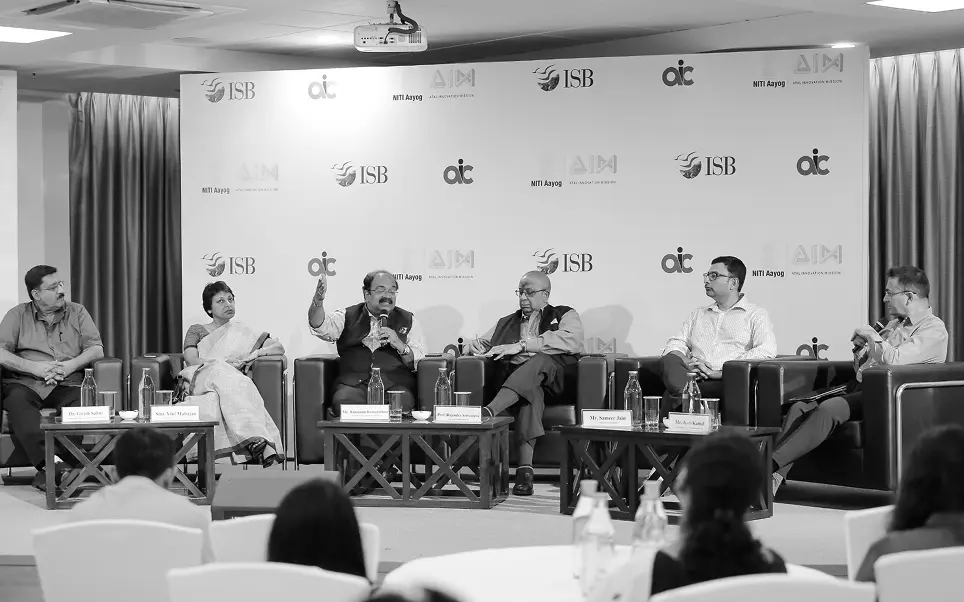

International accreditations reinforced ISB’s position among the world’s leading business schools.
2017
ISB earned EQUIS accreditation and AACSB re-accreditation, joining a select group of business schools worldwide to hold both distinctions.
2017
International accreditations reinforced ISB’s position among the world’s leading business schools.

ISB earned EQUIS accreditation and AACSB re-accreditation, joining a select group of business schools worldwide to hold both distinctions.
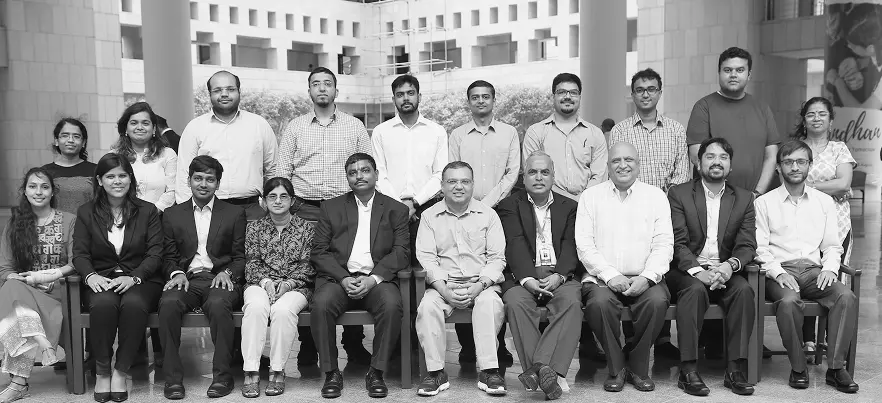

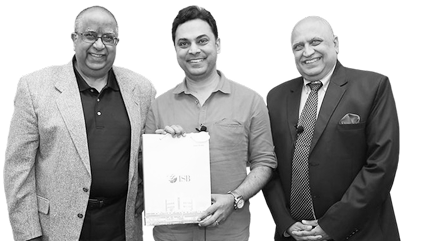
The Executive Fellow Programme in Management (EFPM) was launched for senior professionals pursuing doctoral-level research and practice-oriented scholarship.
Harish Manwani, Non-Executive Chairman of Hindustan Unilever, was appointed Chairman of ISB’s Executive Board.
ISB faculty member Professor Krishnamurthy Subramanian was appointed Chief Economic Adviser to the Government of India, reflecting the School’s growing contribution to public policy.
New leadership appointments and academic initiatives reflected ISB’s growing influence across business, public policy, and management education.
2018
2018
New programmes, global accreditation and a decade of growth marked ISB’s next phase of evolution.
In partnership with the National Stock Exchange (NSE), ISB established India’s first business school trading laboratory, giving students and researchers access to real-time financial markets while strengthening research and industry collaboration in finance.
Harish Manwani, Non-Executive Chairman of Hindustan Unilever, was appointed Chairman of ISB’s Executive Board.
ISB faculty member Professor Krishnamurthy Subramanian was appointed Chief Economic Adviser to the Government of India, reflecting the School’s growing contribution to public policy.
ISB launched the Atal Incubation Centre at its Mohali campus, with support from Atal Innovation Mission, NITI Aayog, strengthening its entrepreneurship ecosystem through incubation and acceleration.
ISB became the first Indian member of the Executive Doctorate in Business Administration Council (EDBAC), the only global organisation that focuses exclusively on executive doctoral degree programmes and their issues.

New initiatives and global affiliations strengthened ISB’s ecosystem for entrepreneurship, executive scholarship, and innovation.
2019
2019
New initiatives and global affiliations strengthened ISB’s ecosystem for entrepreneurship, executive scholarship, and innovation.
ISB launched the Atal Incubation Centre at its Mohali campus, with support from Atal Innovation Mission, NITI Aayog, strengthening its entrepreneurship ecosystem through incubation and acceleration.
ISB became the first Indian member of the Executive Doctorate in Business Administration Council (EDBAC), the only global organisation that focuses exclusively on executive doctoral degree programmes and their issues.
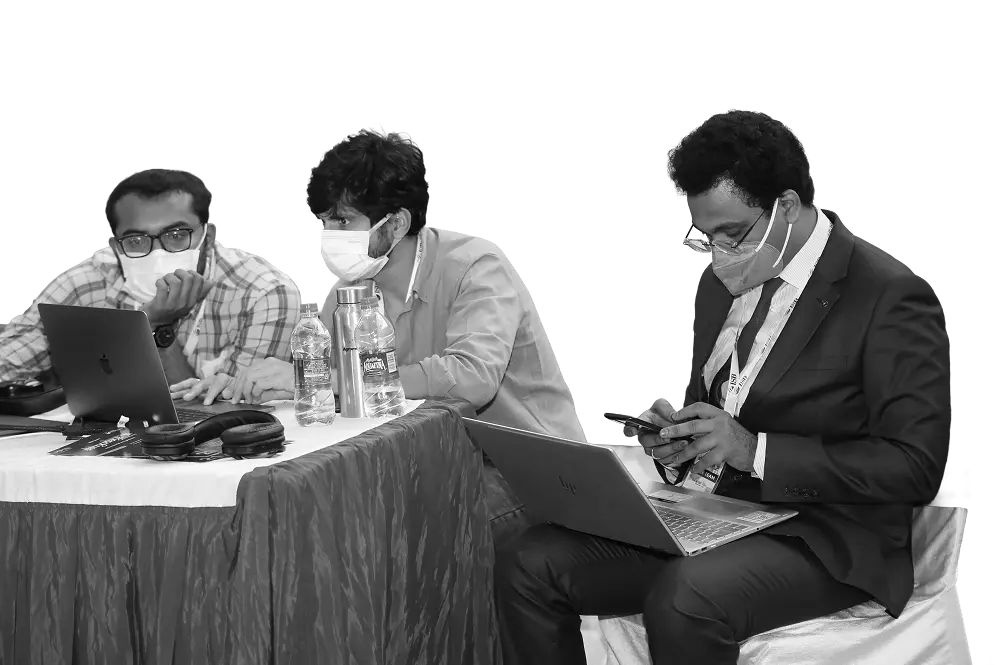



ISB rapidly transitioned to digital and hybrid learning during the COVID-19 pandemic, ensuring continuity across teaching, research, and community engagement.
ISB achieved Triple Crown accreditation after earning AMBA accreditation, joining an elite group of business schools worldwide.
Even amid unprecedented disruption, ISB demonstrated resilience, embraced new ways of learning, and achieved one of the defining milestones in its history.
2020
2020
Even amid unprecedented disruption, ISB demonstrated resilience, embraced new ways of learning, and achieved one of the defining milestones in its history.
ISB rapidly transitioned to digital and hybrid learning during the COVID-19 pandemic, ensuring continuity across teaching, research, and community engagement.
ISB achieved Triple Crown accreditation after earning AMBA accreditation, joining an elite group of business schools worldwide.
2016-2020
03
Academic Partnerships
Kellog | Wharton | LBS
40+
Campus Acreage
Acres, Hyderabad
260
Academic Partnerships
Kellog | Wharton | LBS
2016-2020
03
Academic Partnerships
Kellog | Wharton | LBS
40+
Campus Acreage
Acres, Hyderabad
260
Academic Partnerships
Kellog | Wharton | LBS
2021-2026
As the world changed, ISB continued to evolve.
The School reimagined
learning, expanded its
academic portfolio, and deepened its
contributions to
research, entrepreneurship and
industry engagement.

ISB is a testament to extraordinary philanthropy.
We remain deeply grateful for the vision and generosity of
the
individuals and corporations who have supported us
from
the
very beginning. And those who continue to do so today.
- Prof Madan Pillutla,
Dean (2021-Present)
2021-2026
As the world changed, ISB continued to evolve.
The School reimagined learning, expanded its
academic portfolio, and deepened its contributions to
research, entrepreneurship and
industry engagement.
ISB is a testament to extraordinary philanthropy. We remain deeply grateful for the vision and generosity of the individuals and corporations who have supported us from the very beginning. And those who continue to do so today.
- Prof Madan Pillutla,
Dean (2021-Present)
A new Dean, research milestones, international partnerships, and
entrepreneurship initiatives marked the beginning of ISB's next phase of
growth.
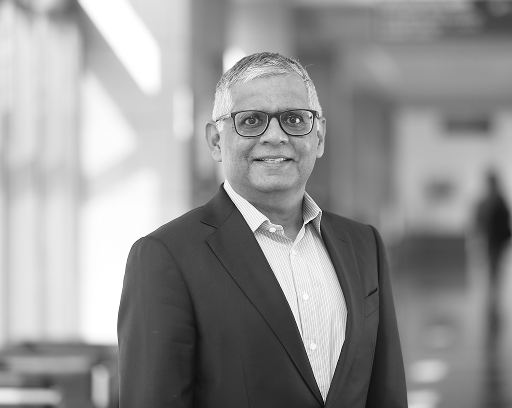
2021
ISB launched the ISB Case Collection to build a repository of India-focused business cases, bringing the complexities and realities of Indian businesses into the classroom.
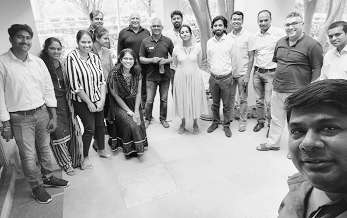
ISB launched I-Venture@ISB as the umbrella platform for its entrepreneurship initiatives, bringing together incubation, acceleration, and venture support under a unified ecosystem.
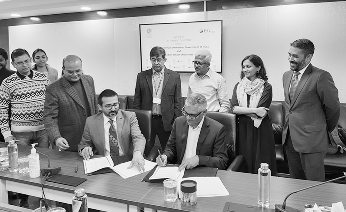
ISB entered into a knowledge partnership with the Capacity Building Commission to strengthen the capabilities of India’s civil services through research, learning and executive training.
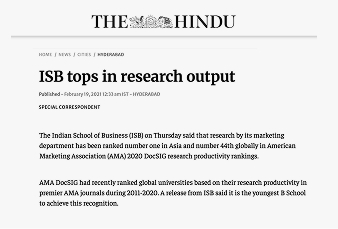
ISB was ranked #1 in Asia for research productivity by the American Marketing Association.
2021
A new Dean, research milestones, international partnerships, and entrepreneurship initiatives marked the beginning of ISB’s next phase of growth.
Professor Madan Pillutla was appointed Dean, ushering in a new phase of growth focused on academic excellence, innovation, and global engagement.
ISB launched the ISB Case Collection to build a repository of India-focused business cases, bringing the complexities and realities of Indian businesses into the classroom.
ISB launched I-Venture@ISB as the umbrella platform for its entrepreneurship initiatives, bringing together incubation, acceleration, and venture support under a unified ecosystem.
ISB entered into a knowledge partnership with the Capacity Building Commission to strengthen the capabilities of India’s civil services through research, learning and executive training.
ISB was ranked #1 in Asia for research productivity by the American Marketing Association.
ISB celebrated two decades of transforming
management education, while
reflecting on its journey
from a bold vision to a globally recognised
institution.

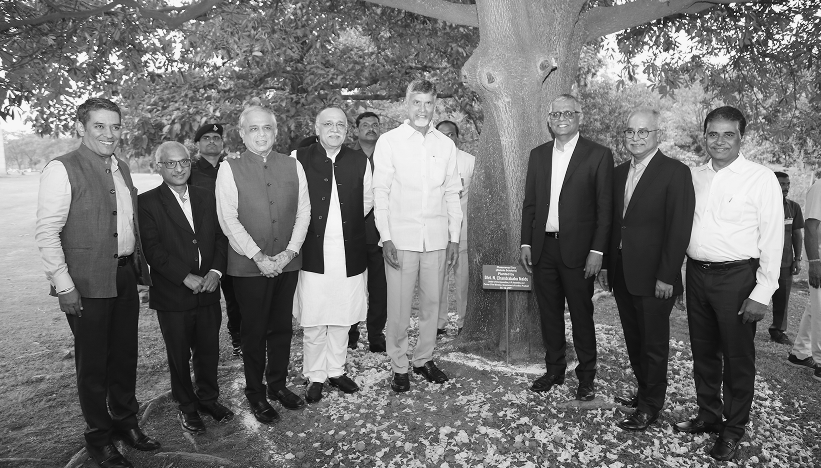
2022
2022
ISB celebrated two decades of transforming management education, while reflecting on its journey from a bold vision to a globally recognised institution.
PM Modi also launched a commemorative stamp, celebrating 20 years of ISB.
ISB celebrates its 20th anniversary, marking two decades of redefining business education in India.
Prime Minister Narendra Modi addressed ISB’s anniversary celebrations in Hyderabad, congratulating ISB students for playing a major role in leading the country’s businesses and building startups.
New initiatives expanded ISB's reach across executive learning, research, public policy, and digital education.
2023
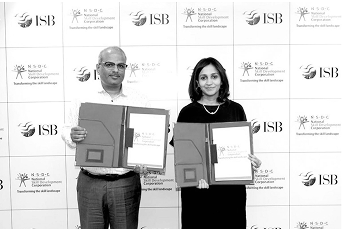
Building on its 2022 partnership with NSDC, ISB became a knowledge partner to the G20 Education Working Group in 2023, contributing research and thought leadership on the future of work and skills.
-CLdE_w2L.png)
ISB emerged as India's leading business school for entrepreneurship, with more alumni founding venture-backed companies than any other Indian B-school over the previous decade. These companies raised US$4.5 billion in venture capital. (PitchBook, 2023)
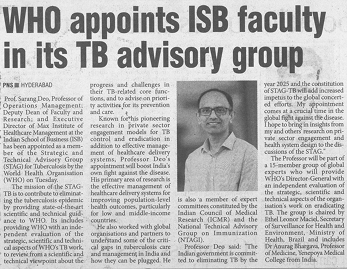
ISB faculty member Professor Sarang Deo was appointed to the World Health Organization's Strategic and Technical Advisory Group for Tuberculosis.

ISB launched ISB Online, extending its learning experience through a digital platform.
2023
New initiatives expanded ISB’s reach across executive learning, research, public policy, and digital education.
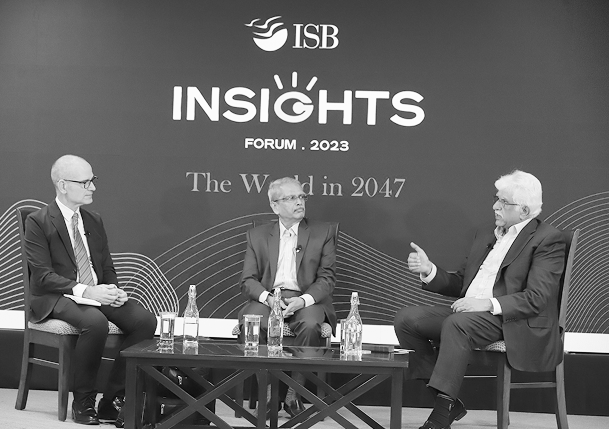
ISB Insights Forum was launched as a platform for dialogue and thought leadership, bringing together leaders from business, policy, and academia.
Building on its 2022 partnership with NSDC, ISB became a knowledge partner to the G20 Education Working Group in 2023, contributing research and thought leadership on the future of work and skills.
ISB emerged as India’s leading business school for entrepreneurship, with more alumni founding venture-backed companies than any other Indian B-school over the previous decade. These companies raised US$4.5 billion in venture capital. (PitchBook, 2023)
ISB faculty member Professor Sarang Deo was appointed to the World Health Organization’s Strategic and Technical Advisory Group for Tuberculosis.
ISB launched ISB Online, extending its learning experience through a digital platform.
New programmes, curriculum enhancements, and a refreshed brand identity reflected ISB's continued evolution to meet changing learner and industry needs.
2024
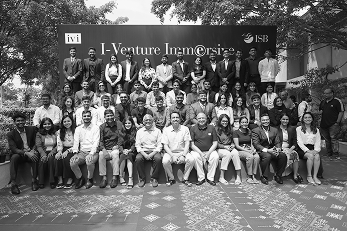
ISB welcomed the inaugural cohort of I-Venture Immersive (IVI), a six-month founder residency programme supporting early-stage startups through immersive venture building.
ISB unveiled a refreshed brand identity, with its updated logo symbolising the institution’s innovative and forward-thinking approach.
ISB established the Centre for Learning and Teaching Excellence (CLTE) to strengthen teaching innovation and enhance the learning experience across its programmes.
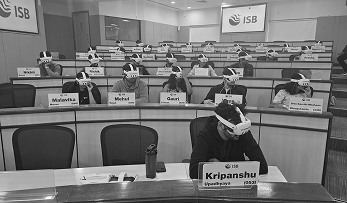
The School introduced a redesigned curriculum to equip students for a dynamic, AI-focused business landscape, with more programme flexibility, market-aligned learning, and refreshed electives.
2024
New programmes, curriculum enhancements, and a refreshed brand identity reflected ISB’s continued evolution to meet changing learner and industry needs.
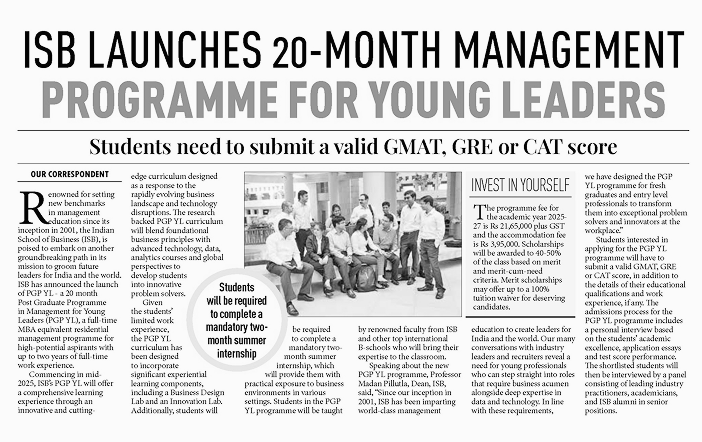
ISB launched the 20-month Post Graduate Programme for Young Leaders (PGP YL) for fresh graduates and early-career professionals.
ISB welcomed the inaugural cohort of I-Venture Immersive (IVI), a six-month founder residency programme supporting early-stage startups through immersive venture building.
ISB unveiled a refreshed brand identity, with its updated logo symbolising the institution’s innovative and forward-thinking approach.
ISB established the Centre for Learning and Teaching Excellence (CLTE) to strengthen teaching innovation and enhance the learning experience across its programmes.
The School introduced a redesigned curriculum to equip students for a dynamic, AI-focused business landscape, with more programme flexibility, market-aligned learning, and refreshed electives.

A landmark philanthropic contribution, a new knowledge platform, and continued global recognition reflected ISB's growing institutional strength and impact.
2025
2025
A landmark philanthropic contribution, a new knowledge platform, and continued global recognition reflected ISB’s growing institutional strength and impact.
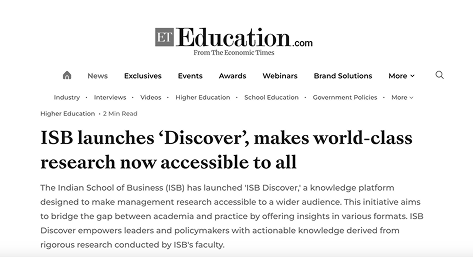
The School launched ISB Discover, a digital platform aiming to bridge the knowledge gap between academia and practice.
ISB became the first Indian member of the Executive Doctorate in Business Administration Council (EDBAC), the only global organisation that focuses exclusively on executive doctoral degree programmes and their issues.
ISB ranked fifth globally in the LinkedIn Top MBA Programs 2025 rankings, recognised for the career outcomes of its alumni.

As ISB marked 25 years since its founding, new milestones in global recognition and campus development reflected the strength of the institution it had become.
2026
2026
As ISB marked 25 years since its founding, new milestones in global recognition and campus development reflected the strength of the institution it had become.
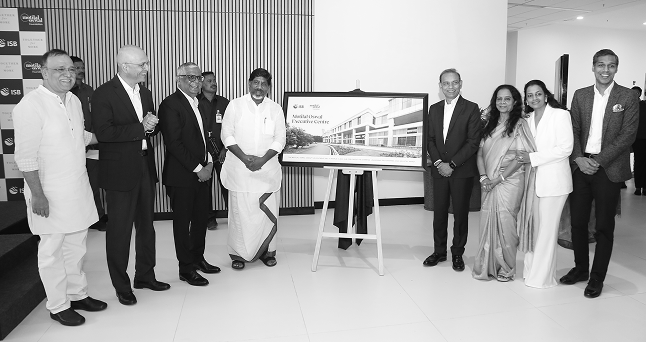
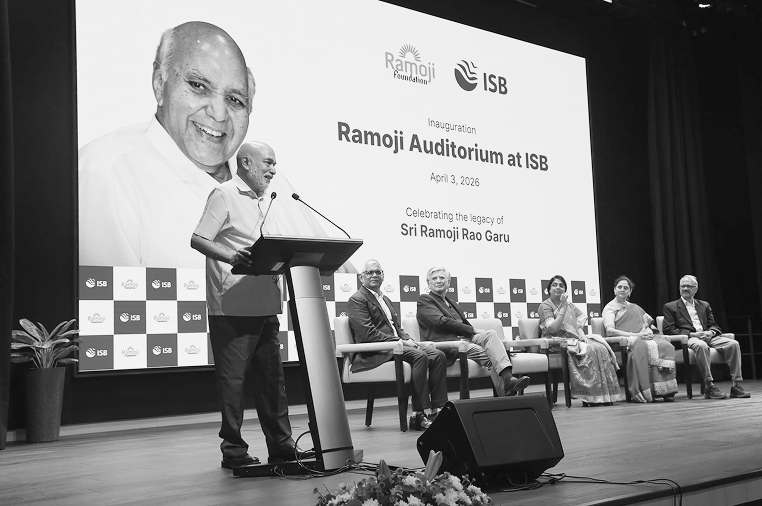
The state-of-the-art Ramoji Auditorium was inaugurated at the Hyderabad campus, developed with a ₹30 crore CSR gift from the Ramoji Foundation.
ISB entered its Silver Jubilee year, marking 25 years of growth across research, leadership, entrepreneurship, and management education.
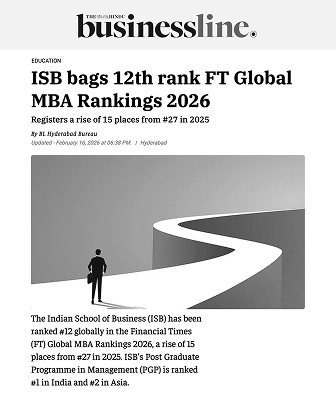
ISB ranks 12th in the FT 2026 Global MBA Rankings, underscoring its continued rise among the world’s top business schools.
2021-2026
03
Academic Partnerships
Kellog | Wharton | LBS
40+
Campus Acreage
Acres, Hyderabad
260
Academic Partnerships
Kellog | Wharton | LBS
2021-2026
03
Academic Partnerships
Kellog | Wharton | LBS
40+
Campus Acreage
Acres, Hyderabad
260
Academic Partnerships
Kellog | Wharton | LBS

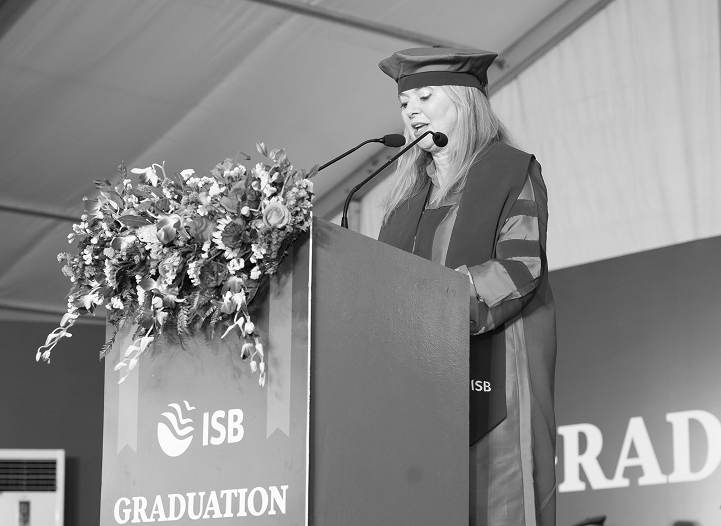
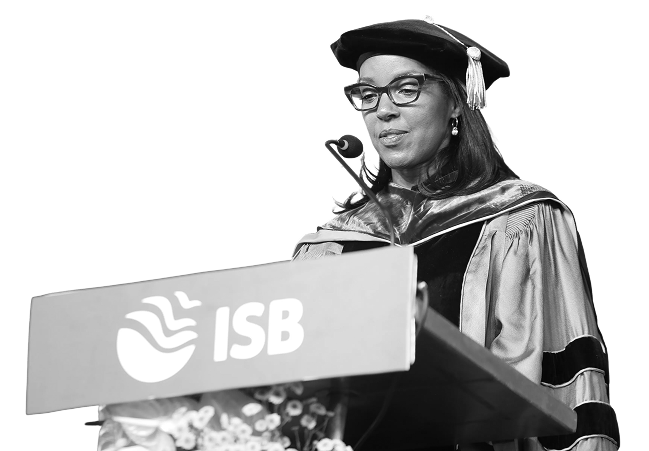

25 years after Wharton and Kellogg helped shape ISB’s founding vision, their current deans joined the School’s 25th Graduation celebrations as Chief Guests.
25 years after Wharton and Kellogg helped shape ISB’s founding vision, their current deans joined the School’s 25th Graduation celebrations as Chief Guests.
At the Hyderabad campus, Erika H. James, Dean of the Wharton School, encouraged the Class of 2026 to lead with resilience, self-awareness and a commitment to growth.
At the Mohali campus, Francesca Cornelli, Dean of the Kellogg School of Management, urged graduates to lead with integrity, bridge differences and create meaningful impact.
1996-2000
19962001-2005
20012006-2010
20062011-2015
20112016-2020
20162021-2026
2021